How Does the EU Digital Product Passport Work?
Last reviewed

Knowing what the Digital Product Passport is doesn't tell you much about how it actually functions day to day — how the data is stored, who can see what, and what happens when someone scans that QR code on a product. This post walks through the mechanics, based on the European Commission's official DPP FAQ. If you haven't read our overview of what the DPP is yet, that's a good starting point before this one.
The core mechanism: scan a data carrier, reach the data
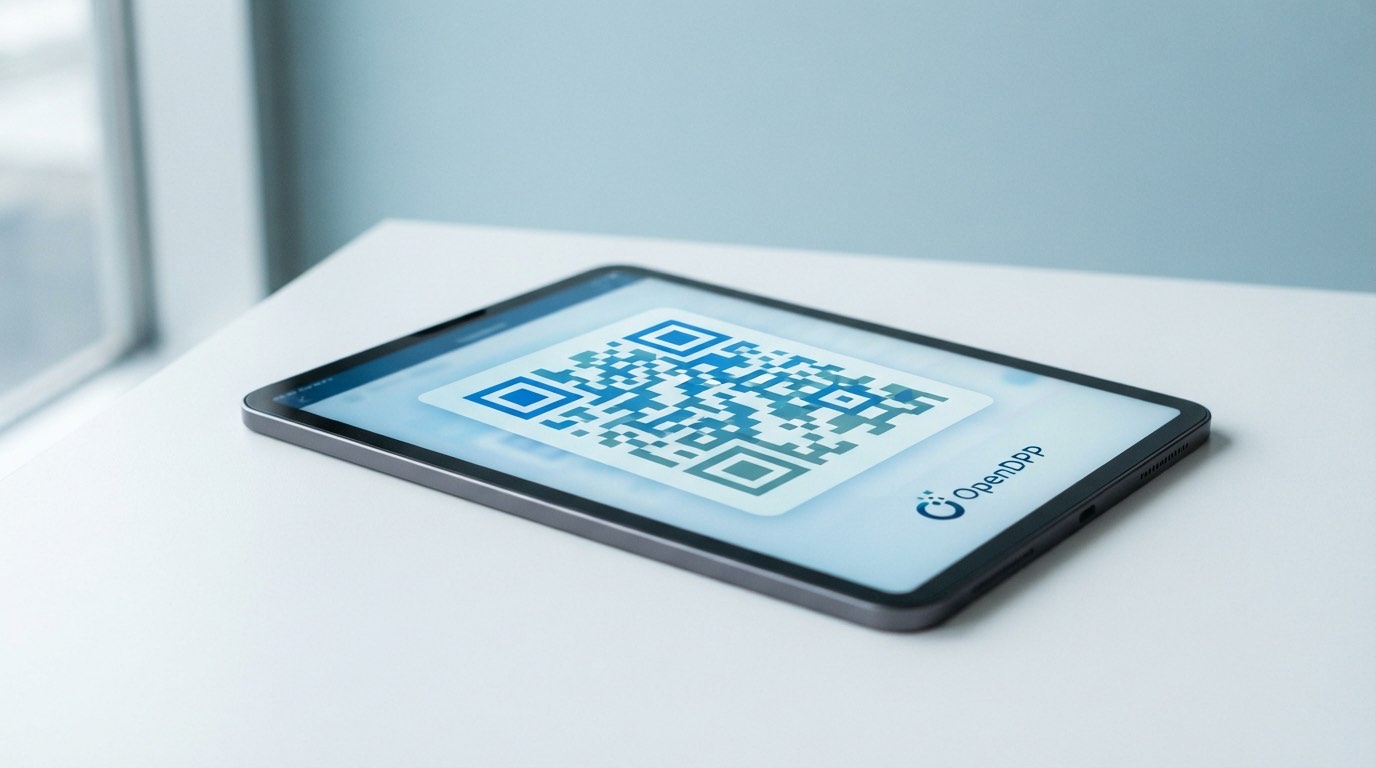
Every product with a DPP has a data carrier — most commonly a QR code, though other technologies (NFC chips, for example) are being assessed — attached to the product, its packaging, or its accompanying documentation. Scanning it links you to that specific item's passport.
There are also two alternative access routes:
- The EU DPP Web Portal, a planned public interface where consumers and businesses can search and compare product information without needing the physical item in hand.
- Online marketplaces, which will be required to surface DPP information directly on the product listing page.
For consumers without a smartphone, the Commission expects a mix of fallback options: in-store kiosks or tablets, staff assistance at customer service desks, or a printed copy on request.
Centralised registry, decentralised data — how that split works
This is the part that trips people up: the DPP is neither fully centralised nor fully decentralised — it's a hybrid.
- The EU DPP Registry is centralised. It doesn't store the actual product data — it stores each product's unique identifier and a pointer to where the real data lives.
- The detailed product data itself is decentralised — hosted by the economic operator directly, or by a specialist DPP service provider on their behalf.
This structure means individual businesses keep control of and responsibility for their own data, while the registry gives customs authorities, market surveillance bodies, and eventually the public a single, reliable place to check that a valid DPP exists for a given product.
Independent of who hosts the primary data, the regulation also requires a back-up copy through a separate, independent DPP service provider, so the passport remains accessible even if the original operator goes out of business.
As of 20 July 2026, the European Commission has launched the DPP Registry along with a testing environment, giving businesses a real system to start registering against — Commission Implementing Regulation (EU) 2026/1778 sets out the technical rules for access management, user verification, and data registration in the Registry.
How it works for each type of user
Economic operators (manufacturers, importers, distributors, authorised representatives, fulfilment providers) are responsible for compiling the product data, registering the unique identifier in the Registry, attaching the physical data carrier, and keeping the data accurate for as long as the product is expected to be in use.
Consumers scan the data carrier — or search the web portal — to see product information before buying, and can return to the same passport later for manuals, maintenance guidance, or end-of-life instructions.
Customs and market surveillance authorities query the Registry to confirm a valid DPP exists before releasing an imported product for free circulation, and can scan a product's data carrier directly during compliance checks. The automated customs interconnection is required to be operational within four years of the relevant implementing act entering into force.
Repairers, refurbishers, and recyclers can pull disassembly instructions, compatible spare parts lists, and diagnostic information (where those fields are required for the product) to make repairs faster and cheaper — and recyclers can identify material composition, including recoverable critical raw materials and substances that need special handling.
Interoperability: why every DPP "speaks the same language"
None of this works if every manufacturer's DPP is structured differently. To prevent that, the Commission issued a standardisation request to the European Standardisation Organisations (CEN, CENELEC, and ETSI), whose joint technical committee (JTC 24) is developing eight harmonised standards covering:
- Unique identifiers for products, operators, and facilities
- Data carriers and the product-to-data link
- Access rights, information security, and data protection
- Technical, semantic, and organisational interoperability
- Data exchange protocols and formats
- Long-term data storage and archiving
- Data authentication and integrity
- APIs for managing a DPP across its lifecycle
Six of these have been published by the European standardisation bodies and cited in the Official Journal; the remaining two are still final drafts at formal vote.
Privacy: what the DPP does and doesn't collect
The DPP is built around product data, not personal data. "Privacy by design and by default" is a core principle: general access to a product's passport is anonymous, no personal identification is needed, and personal customer data isn't stored in a DPP by default. The only exception is if someone explicitly, and in full compliance with GDPR, consents to linking their personal data to a passport for a specific purpose.
Sources
- Digital Product Passport: Frequently Asked Questions (FAQ) — European Commission, DG GROW, December 2025
- The Digital Product Passport Registry is now live — European Commission, July 2026
- Regulation (EU) 2024/1781 (Ecodesign for Sustainable Products Regulation) — EUR-Lex
This article reflects publicly available EU guidance current as of August 2026 and is not legal advice.